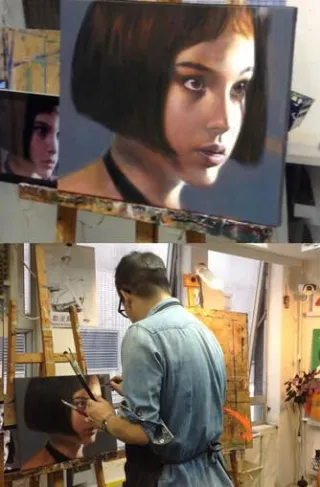
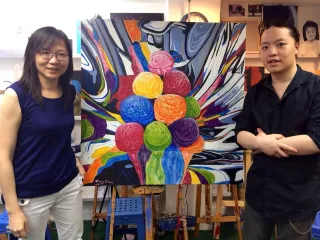
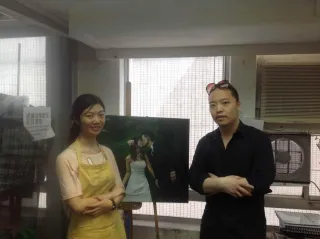
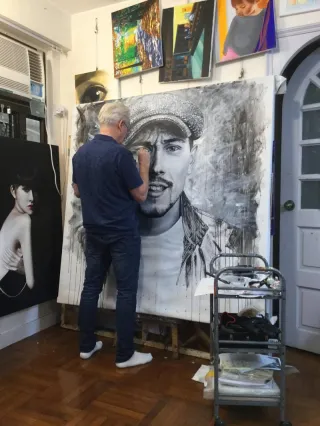
由基礎繪畫困難、備考同作品集(portfolio),到展覽、藝術市場同藝術事業發展(artistic career development),再到多媒體、裝置(installation)同 AI art prompting——下面列出嘅,係唔同目標對應嘅唔同課程同諮詢。
我們最重視嘅教學理念:設計課程,一心以學員將來有百分之百創作自由(100% creative freedom)為終極目標——你想行當代語彙、玩現代主義實驗,又或者挑戰高難度寫實,都唔應該俾早期訓練「鎖死」。所以我哋用當代藝術同現代藝術嘅創意方法(contemporary & modern art creative methods)做起點,對準而家藝壇嘅品味、潮流同新興製作方式(new art-making methods);同時以Old Masters 技法(Renaissance studio craft)打底——材料用得啱唔啱,先至決定個創意落唔落到畫布。
市面上多數本地畫室或院校,通常只教到一邊:要不技法練得幾紮實,却對而家嘅藝術現場理解唔深——畫工進步咗,都未必知今日邊啲做法先算行得通;要不標榜創意、觀念夠前衛,却唔識點樣有效運用材料——想法留喺口頭,作品做唔到位。我哋兩邊一齊教;喺度學,你會同時得到兩邊嘅好處——跟得上當下,亦有真功夫托底。
點解選我哋?因為導師本身係稱職嘅藝術家,亦係藝術收藏家(art collectors)。收藏家嘅判斷,往往比策展人(curator)更貼地:策展偏重公開展覽嘅安排;收藏家就用真金白銀反覆試——邊啲作品真有熱誠、真有學問、真站得住;買錯就要自己埋單,呢個標準會直接變成你喺課堂上聽到嘅具體理由。
跟住講清楚:我哋點樣將上面嘅理念拆做具體服務,而唔係用一個「畫畫班」包晒——方便你對準自己而家真正需要邊一項:
一、點解「備考/作品集」同「興趣繪畫」要分開? 備考要對準評審標準、時限同作品完整性;興趣班要留探索空間。如果硬塞同一個進度,備考學員可能覺得進度被拖慢,興趣學員又可能被技術操練壓到透唔到氣。分開列,就係唔想創作自由俾錯嘅時間表綁死。
二、點解要有展覽、藝術市場同事業發展諮詢? 呢三樣問嘅唔係「點落筆」,而係作品離開畫室之後,點樣被人見到、點樣被定價、點樣延續落去——即係「創意方法」同「真實現場」接軌嘅位。收藏家背景嘅導師先至答到具體:邊啲做法而家行得通、邊啲只係課堂內睇落好靚——淨係教示範畫嘅導師,好難俾到呢種一線判斷。
三、點解清單會有多媒體、裝置同 AI prompting? 當代同現代創意方法,早就不止油畫或水彩。混合媒材(mixed media)、裝置、數碼同互動(digital / interactive art)係好多學員本身已經喺做嘅方向——分項列出,等「百分之百創作自由」喺選課嗰刻就有入口,而唔係逼晒所有當代需求入一個風景班。
四、點解唔同服務背後,仍然共用 Old Masters 功底? 無論你揀邊一項,材料控制(material control)都係共通語言——呢個就係「兩邊兼備」嘅底。各課程可按目標接入唔同深度:學院派寫實如布格羅(William-Adolphe Bouguereau)、林布蘭(Rembrandt);照片寫實如 Chuck Close;當代如 Jeff Koons、Anselm Kiefer、Andy Warhol、Jean-Michel Basquiat、Mr.(Kaikai Kiki)、Peter Doig、Julian Schnabel、Rudolf Stingel、Julie Mehretu,以及 KAWS、陳逸飛、奈良美智(Yoshitomo Nara)——呢份名單係深度地圖;你揀邊一項課程,就對應地圖上嘅邊一段。
From foundational drawing difficulties, examination preparation and portfolio work, to exhibitions, the art market and artistic career development, multimedia and installation, and AI art prompting—the list below matches different goals to different courses and consultations.
Our core teaching philosophy: we design every course with one endgame—100% creative freedom for students. Whether you later pursue contemporary idioms, modernist experiment, or high-threshold realism, early training should not lock you in. We therefore start from contemporary and modern art creative methods—today's taste, trends, and new art-making methods—while grounding instruction in Old Masters technique (Renaissance studio craft). Effective use of materials is what turns any idea into work that actually holds on canvas.
Most local studios and schools can only teach one side: either solid technique without deep grasp of the current art field—students improve craft but may not know what still works today; or creative, concept-led teaching without knowing how to use materials effectively—ideas stay verbal, work never lands. We do both; studying here gives you benefits at both ends—current relevance plus real craft underneath.
Why choose us? Our instructors are practising artists and art collectors. A collector's judgment is often closer to the real market than a curator's: curators organise public display; collectors test work with their own money—passion plus knowledge, repeated until only work that holds up remains. That standard becomes the concrete reasoning you hear in class.
Here is how we break that philosophy into concrete services instead of one generic “art class”—so you can see what you actually need:
1. Why exam/portfolio work is not the same as hobby painting. Exams demand jury criteria, deadlines, and finished portfolios; hobby classes need room to explore. One shared pace either slows exam students or crushes explorers with drill. Separation keeps creative freedom from the wrong timetable.
2. Why exhibition, market, and career consultations exist. These ask what happens after work leaves the studio—where creative method meets the real field. Collector-instructors can say which approaches hold up now versus what only looks good in class—first-hand judgment demo-only teachers rarely offer.
3. Why multimedia, installation, and AI prompting are listed. Contemporary and modern creative methods are not limited to oil or watercolour. Many students already work in mixed media, installation, or digital/interactive art—separate entries give 100% creative freedom a real doorway when you enrol, not a single landscape class forced to carry everything.
4. Why Old Masters craft sits underneath all of them. Whatever you choose, material control is shared language—the base of “both ends.” Each course connects to different depths: academic realism (William-Adolphe Bouguereau, Rembrandt); photorealism (Chuck Close); contemporary (Jeff Koons, Anselm Kiefer, Andy Warhol, Jean-Michel Basquiat, Mr. [Kaikai Kiki], Peter Doig, Julian Schnabel, Rudolf Stingel, Julie Mehretu, KAWS, Chen Yifei, Yoshitomo Nara)—a depth map. Pick a course; you pick a segment.